
PET-FRIENDLY OUTDOOR SPACES
A yard that works better for you and your pets.
More time together outside. Less working around a loose gate, a digging spot or a fence that does not fit your pet. Start with a practical plan for the way your family actually uses the yard.
Austin · Georgetown · Central Texas
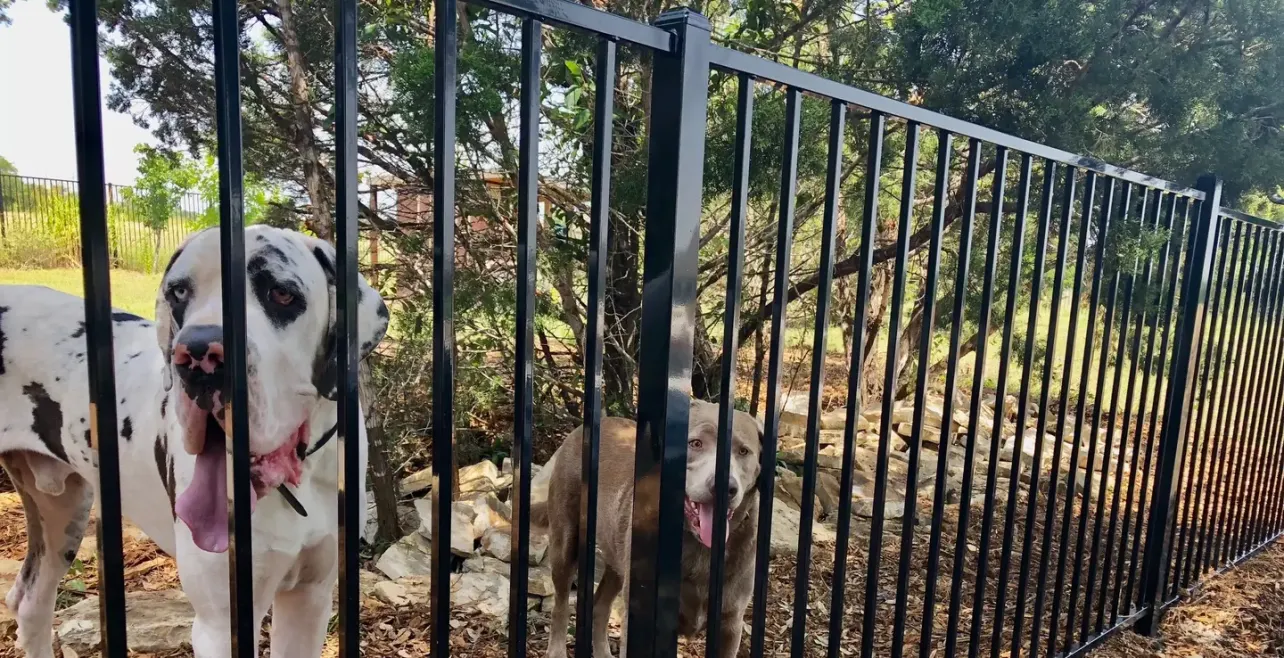
Start with your pet. Not a product.
The right detail for a small dog may be wrong for a climber, a curious cat or a dog who reacts to the neighbors. Your pet’s habits and your property belong in the same conversation.
- Under: digging, washouts and bottom gaps
- Through: picket openings and damaged panels
- Over: jumping, climbing and nearby launch points
- At the gate: latches, access and daily routines
Have pets? Tell us before we plan your fence.
We normally build to applicable fencing requirements and the agreed project scope. Those requirements do not automatically account for your particular pet’s size, habits or ability to get under, through or over a fence.
Before design or quoting, tell us about all your pets—their sizes and habits, including digging, jumping, climbing, squeezing through openings or reacting to activity beyond the fence. We can then work backward from those needs to plan appropriate fence, gate and ground details with you and clearly agree on what the project includes.
Do not assume a standard fence is designed to contain your particular pet.
Built Right · Priced Fair · Planned Well · Trust Earned
You should not have to plan outdoor time around the weak spot in your fence.
Maybe your dog has found a gap under the gate. Maybe the neighbor’s dog turns every trip outside into a fence-line standoff. Or perhaps your indoor cat would enjoy fresh air, but an open yard is not the right setting. You do not need every pet product on the market. You need to know what fits—and what does not.
A construction plan that starts by listening.
Sagamore Fence & Deck has been building in Central Texas since 2013. We bring that fence, gate and outdoor-construction experience to the conversation: look at the existing conditions, talk through your goals and put the agreed scope in writing. Specialty pet features need a separate fit and availability review before they become part of your project.
Match the upgrade to the way your pet uses the yard.
These are planning options, not one-size-fits-all packages. Materials, openings, hardware and specialty systems need to suit the individual animal, the structure and the site.
Fence gaps & digging
Discuss damaged pickets, bottom gaps, protected dig barriers, kickboard details or a secured ground apron. The plan must account for soil, roots, drainage and utilities—not just cover the visible hole.
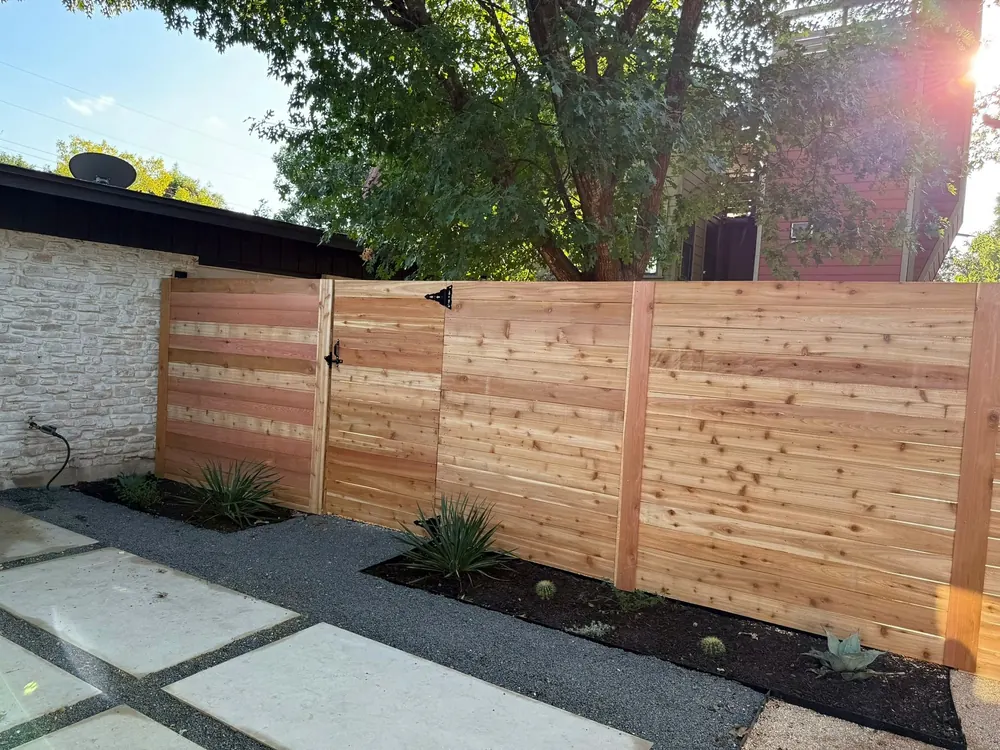
Gates that support your routine
Review sagging gates, latch engagement, closing hardware and access for family, deliveries and lawn care. A double-entry layout may add a useful second boundary where space and site conditions allow.
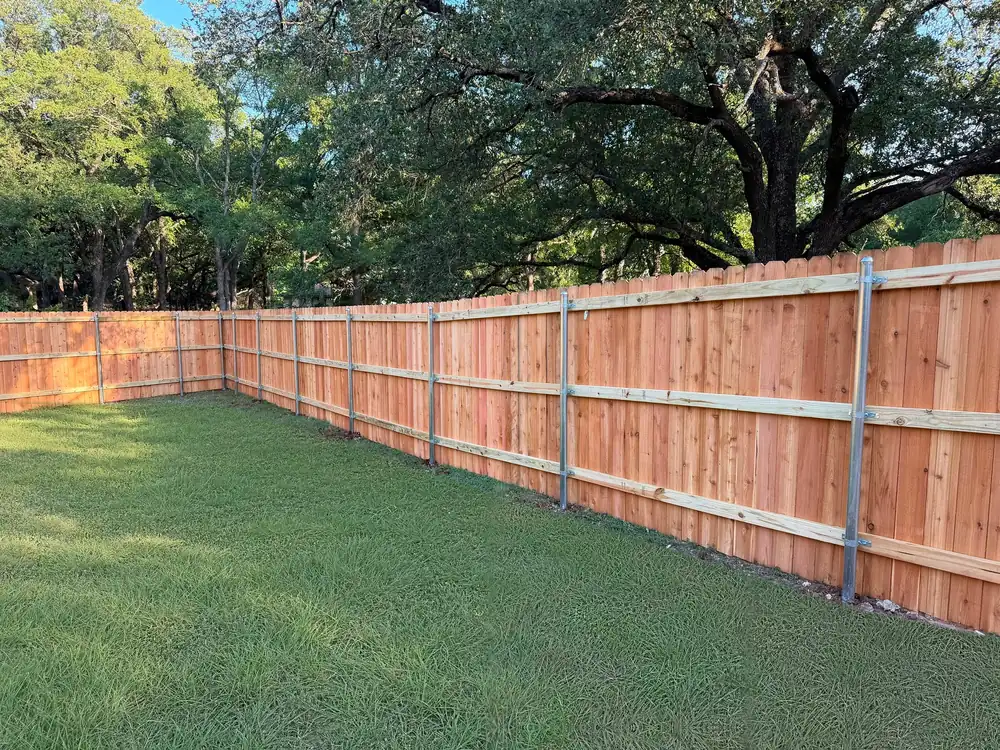
Privacy & separation
For dogs who react to activity through the fence, discuss solid sightline barriers and an internal setback partition. Keep neighboring dogs from direct contact; construction supports management, not a promise to change behavior.
Dog runs & managed pet areas
Consider a defined outdoor area, household partitions, cleaning access and a planned base. Shade, fresh water and time with people still matter. A run is not a substitute for exercise or indoor shelter.
Catios & enclosed tunnels
Explore a roofed enclosure with secure sides, a planned base and a protected connection to the house. Perches, resting spots and cleaning access can make a catio useful every day. Design and availability require review.
Deck access, rails & shade
Review surface condition, stair access, railing openings and shade. A permanent pet ramp needs suitable geometry, anchorage and traction; pet-specific infill must not compromise required guards or pool barriers.
A view is not right for every dog.
A clear viewing bubble can be an enjoyable option for some calm, nonreactive pets. For a dog who barks or lunges at activity beyond the fence, a solid visual barrier is usually the better starting conversation. A veterinarian or qualified behavior professional can help with persistent reactions. No window or fence promises less aggression.
For cats, think enclosure—not just a taller fence.
Cats climb, squeeze and use nearby structures in ways a dog-focused fence may not address. A catio with a secure roof, sides, base and access point gives the project a defined boundary. Fence-top cat systems need a separate review of every gate, tree and possible bypass. Neither approach replaces inspection or supervision.
Plan for the details you will live with.
Openings & edges
Small openings can still trap a head, paw or collar. There is no universal pet-safe picket gap. Assess the smallest pet, finish sharp edges and check for snagging and new climbing routes.
Heat & surfaces
Shade changes during the day. Wood, composite, turf and paving can get hot; heat-mitigating products still need care. Plan fresh water, indoor retreat and cleaning that does not leave slippery residue.
Pools & permissions
Pet gates and pet doors do not replace required pool barriers. Confirm HOA rules, local permissions, drainage and utilities before changing fence height, adding a roof or closing bottom gaps.
Care & supervision
Check gates and enclosure edges regularly and after storms, digging or yard work. No fence is escape-proof or predator-proof. Keep pets indoors until damaged sections are repaired.
A clear plan. Three practical steps.
1. Consult
Before design or quoting, tell us about all your pets, their sizes and habits, and any known escape routes or fence-line reactions. Review the yard and agree which pet-specific needs the project should address.
2. Plan
Compare appropriate options, check site restrictions and confirm specialty-system fit. Agree on the construction scope and a written quote.
3. Build
If the project is a fit and you approve the plan, complete the agreed work and review operation, maintenance and the limits of the finished enclosure.
Questions worth asking.
Is a standard fence automatically designed for my pet?
No. Meeting applicable fencing requirements does not automatically address an individual animal’s containment needs. Tell us about your pets before design or quoting so we can work backward from their sizes and habits and agree on the fence, gate and ground details to include. No fence guarantees containment.
Can you stop a dog from digging under a fence?
A protected dig-resistant base may help address that route, but digging can also reflect heat, boredom, prey or anxiety. A site review determines whether a buried barrier, apron or other repair fits. No construction detail guarantees a dog will stop trying to escape.
Are viewing bubbles a good idea?
Only for suitable pets and locations. Added visibility can be the wrong choice for a dog triggered by passersby or neighboring dogs. Product quality, mounting details and the effect of the cutout need review before installation.
Will rollers stop a dog from jumping over the fence?
Not necessarily. Rollers are intended to interfere with gripping the top, not a pet clearing the entire fence. Fence height, condition, corners, gates and nearby launch points matter. Specialty-system selection and local permissions must be reviewed.
Can a regular fence keep my cat in the yard?
Do not assume so. Cats can climb and use trees, roofs or other structures to bypass a fence. A fully enclosed catio is the first concept to discuss; fence-top conversions need individual review and ongoing care.
Can a pet door be part of the project?
Possibly, subject to scope and specialist review. A pet door provides access, not containment. Its location must account for wall construction, weather sealing, security, other animals, children and any pool-barrier requirements.
Can the existing fence be upgraded instead of replaced?
Sometimes. Posts, panels, gates and connections need to support the proposed addition. We can discuss repair versus replacement; a weak fence should not simply receive a heavier screen, roof or specialty system.
What will a pet-friendly project cost?
The written quote depends on the existing fence, ground conditions, gates, materials, access and approved scope. A manufacturer’s parts price is not an installed project price. Specialty options require availability and compatibility review.
★★★★★ 5.0 from 317 Google reviews
What Central Texas homeowners say about Sagamore Fence & Deck
“We were happy with the Trex deck installation and fence repair that Sagamore did for us. The crew was efficient and the deck came out looking great!”
“Amazing communication, amazing crew - and wonderful work. I enjoyed this experience so much!”
“Communication is clear, they are prompt, caring, superior work and cleanup is excellent. Definitely recommend them for your fence project!”
Make room for better everyday outdoor time.
Tell us about your pets, the space and the detail you would like to improve. Start with a conversation—not a promise that every product fits every yard.
Also considering snake-exclusion planning? Explore the separate planning guide.