
Late fall is when a lot of Austin homeowners take a hard look at the back of the house. The heat finally breaks, people start spending evenings outside again, and family is coming over for the holidays. Then you notice it: a stair tread that rocks, a railing post that gives when someone leans on it, boards that are gray, split and lifting at the ends.
The question that follows is always the same. Do you fix what’s wrong, or is it time to start over? Nobody wants to pay for a rebuild if a repair would do, or pay for repairs every spring on a frame that’s failing underneath.
Here’s how we help homeowners make that call, starting with the part you can check yourself this weekend.
Should I Repair or Replace My Deck?
Repair your deck if the frame is sound. If the posts, beams and joists are solid and the footings haven’t moved, worn boards, stair treads and loose railings can usually be fixed or replaced without tearing anything out. Replace it if the structure is the problem. Rotted posts or joists, footings that have shifted, or framing that flexes when you walk on it usually make a rebuild the safer choice and the better value over time.
The surface tells you how the deck looks. The frame tells you whether it should stay.
The 15-Minute Deck Check
Grab a flashlight and a screwdriver and walk it in this order.
1. The boards
Look for cracks, splits, cupping, soft spots and nails or screws backing out. Press a screwdriver into any board that looks dark or stays damp. If it sinks in easily, that board is rotting. A few bad boards in a sunny, dry area is a repair. Soft spots spread across the surface, especially near the house or under planters, are a sign moisture has been sitting there and may have reached the joists.
2. Stairs and railings
These wear first and matter most. Push firmly on each railing post and the top rail. Step on every stair tread and watch the stringers underneath. A loose post or a cracked tread is usually a straightforward repair. Railing that moves along a whole run, or stair stringers that are split or rotted at the bottom, needs more than a few new screws.
3. The framing underneath
If you can see under the deck, shine the light on the joists and beams. Check them with the screwdriver the same way, paying close attention to the ends, the tops of the joists and anywhere boards meet the house. Look for sagging, rusted hardware and joists that have pulled away from their hangers.
4. Posts and footings
Look where each post meets the ground or the concrete. Rot at the base, posts that lean, or footings that have heaved or sunk are structural problems. Central Texas ground moves. Clay soils in much of the Austin area swell after rain and shrink in dry months, and that movement works on posts and footings year after year.
5. Where it meets the house
If the deck attaches to your home, look at that connection closely. Water stains on the siding, rot along the board fastened to the house, or a gap that has opened between the deck and the wall should be looked at by a pro before anyone puts holiday guests out there.
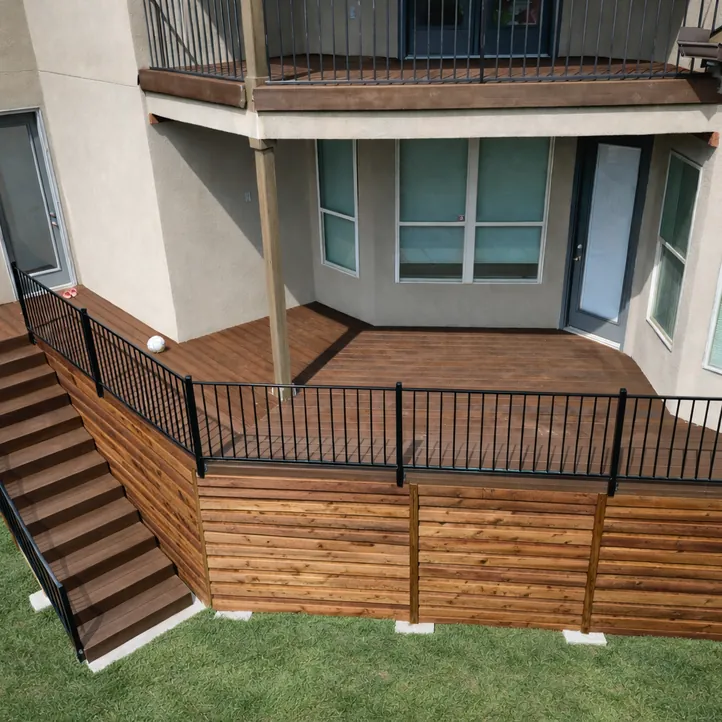
Repair or Replace? What Your Findings Usually Mean
| What you find | Usually |
|---|---|
| Gray, weathered boards that are still firm | Clean and seal, no repair needed yet |
| A handful of cracked, cupped or soft boards | Repair: replace those boards |
| Loose railing post or wobbly stair tread | Repair: re-secure or replace the parts |
| Most boards and the railing worn out, frame solid | Middle path: new surface and railing on the existing frame |
| Rotted joists, beams or stair stringers | Often replace, depending on how widespread |
| Rotted or leaning posts, footings that have moved | Usually replace |
| Framing that flexes or sags when you walk on it | Usually replace |
That’s a starting point, not a verdict. One rotted joist can be a repair. Rot in a dozen of them is a different conversation. We inspect the frame before we recommend anything, and we’ll tell you plainly which way we’d go and why, even when the answer is a smaller job. We repair decks we didn’t build, too.
What Austin’s Permit Rules Say
Permits are one more reason the repair-or-replace line matters. On the City of Austin’s list of work exempt from building permits, a non-structural deck repair limited to the existing deck boards, without guardrails or handrails, doesn’t need a permit. A deck itself is exempt only if it is no more than 200 square feet, no more than 30 inches above grade at any point, not attached to the house, doesn’t provide an exit from the house and isn’t in a flood hazard area.
In plain terms, swapping out bad boards is usually permit-free in Austin. Rebuilding railings or framing, or replacing a deck attached to your house, usually isn’t. Exempt work still has to meet code, and cities around Austin, along with many HOAs, set their own rules. We check what applies to your address and handle the permit and the HOA or ACC approval paperwork when they’re needed.
What About Cost?
Repairs are priced from a free written estimate, because one loose stair and a dozen rotted joists are very different jobs. For a full replacement, our recent Trex and composite deck projects in the Austin area typically ran $10,100 to $28,700. Size, height off the ground, stairs, railing and removing the existing deck move that number the most. Our Austin deck cost guide breaks down what drives the price.
The honest comparison isn’t repair cost against replacement cost today. It’s what you’ll spend over the next several years. Paying to patch a frame that keeps failing usually costs more in the end than building once on solid framing.
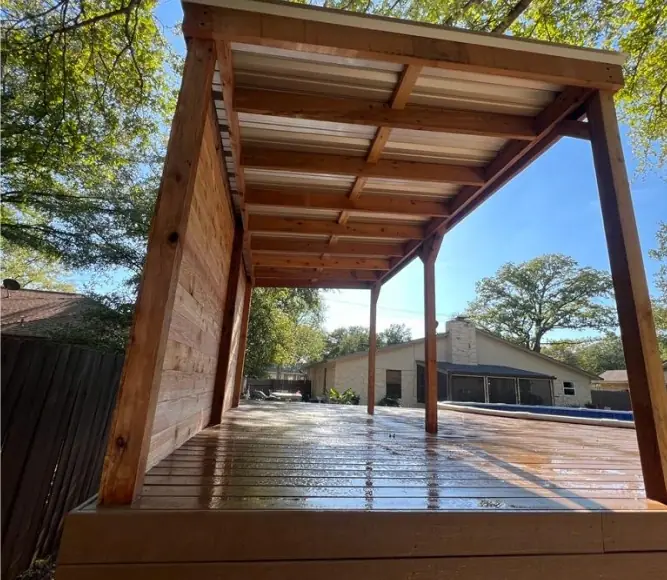
If You Replace It, Choose the Material for the Next Chapter
A rebuild is your chance to fix whatever wore you out about the first one. Wood costs less up front and has a natural look, but in Central Texas sun it needs regular cleaning and sealing to keep it from graying, checking and splintering. Composite and Trex decks resist rot and insects and don’t need staining. Trex backs its decking with its own 25- to 50-year limited residential warranties depending on the line, and every Sagamore project carries our 1-year warranty on labor and workmanship. Our composite vs wood deck guide walks through the trade-offs.
If you’re keeping a wood deck for now, regular care is the cheapest way to put off the next repair. Our deck sealing guide covers the basics.
Your Simple 3-Step Plan
- Call or request an estimate. Tell us what you’re seeing: the soft boards, the loose railing, the stair that rocks. Call 512-337-3714 or contact us online.
- Get a straight answer. We inspect the boards, stairs, railing, framing and footings, then give you a written estimate for the option that makes sense, whether that’s a repair or a rebuild.
- Use your backyard again. Our own fully insured crew does the work and cleans up, and permits and HOA paperwork are handled when they’re needed.
That’s how we approach every project: Built Right, Priced Fair, Planned Well and Trust Earned. You can see more about our deck building and repair work and our Austin service area.
Frequently Asked Questions
Can you replace deck boards without replacing the frame?
Yes, as long as the frame underneath is sound. If the posts, beams and joists are solid and the footings haven’t moved, worn or damaged boards can be replaced on their own. We check the framing first, because new boards on a failing frame only hide the problem for a while.
How often should a deck be replaced?
There’s no set number of years. It depends on the material, how well the frame was built, drainage, sun exposure and how well the surface has been cleaned and sealed. Replace it when the framing, footings or railings are failing, not just because of its age.
Do I need a permit to repair or replace a deck in Austin?
Swapping existing deck boards is usually exempt in Austin, as long as the work is non-structural and doesn’t include guardrails or handrails. A replacement deck usually needs a building permit unless it is small, low, detached, doesn’t serve as an exit from the house and isn’t in a flood hazard area. Other cities and HOAs set their own rules, so we check them for your address.
Is there a middle option between repairing and replacing a deck?
Sometimes. If the frame checks out but most of the boards and railing are worn, replacing the surface and railing on the existing frame can make sense. If the framing is the problem, rebuilding is usually the better value.
Get It Settled Before Spring
Spring is the busiest season for decks in Central Texas, and our mild winters leave plenty of good building days. That makes late fall and winter the easy time to get an honest inspection, plan any permits and have your backyard ready when the weather turns. If you’re asking whether to repair or replace your deck, call Sagamore Fence & Deck at 512-337-3714 or request your free estimate. We’ll tell you what we’d do if it were our own home.
Sagamore Fence & Deck. Built Right.