
You picked the fence. You know where it goes. Then the questions start. Do you need a city permit? How tall can it be? Does the HOA have to sign off, and is that the same thing as the permit? Getting it wrong can mean a violation letter, a failed inspection, or a fence that has to come down.
Here’s how fence rules work in Texas, with links to the official sources for the cities around Austin and Georgetown where we build most.
The short answer: Texas has no statewide fence permit or height limit. Your city decides whether you need a permit and how tall the fence can be. Your HOA decides what it can look like. State law adds a few ground rules, like what an HOA can’t ban and calling 811 before you dig. HOA approval and a city permit are separate, and one doesn’t replace the other.
We’re fence builders, not attorneys. This is general information, not legal advice. For your situation, talk to a Texas real estate attorney. Rules change, so check with your city and your HOA before you build.
What Texas Fence Laws Apply Statewide?
Most fence rules are local, but a few Texas laws apply everywhere. Here’s our plain-language summary of what the statutes linked below say. Follow each link for the exact wording:
- HOAs can’t ban a perimeter fence outright. A property owners’ association can’t adopt or enforce a restriction that prevents you from installing security measures, and the law lists a perimeter fence as one of them. The HOA can still regulate the type of fencing you install (Tex. Prop. Code §202.023).
- HOAs can’t ban a compliant pool enclosure. That covers a fence around a pool or spa made of transparent mesh or clear panels in metal frames, no taller than 6 feet and designed not to be climbable. The HOA can limit colors, but it can’t prohibit a black mesh enclosure in metal frames (§202.022).
- You can appeal an HOA denial. In HOAs with more than 40 lots, once the developer no longer controls the review committee, a denied application can be appealed to the board, and the denial notice has to explain why (§209.00505).
- Call before you dig. Anyone digging 16 inches or deeper with powered equipment, like a post-hole auger, has to notify a notification center at least 48 hours before digging, not counting weekends and legal holidays (Tex. Util. Code §251.151; definition of “excavate,” §251.002). In Texas, that’s Texas811, which tells homeowners to call 811 before building or repairing a fence. On a Sagamore project, you don’t make that call: for any fence we install, and any deck that requires digging, our office requests the 811 dig locate once you sign, because we’re responsible for the excavation. 811 marks lines owned by the utility companies, not private lines on your property, so your part is letting us know where your private lines run: sprinkler and private water lines, pool lines, propane lines, septic systems, invisible pet fence wire and any other private underground lines.
- Shared pools have their own fence law. Apartment complexes and HOAs that own a pool must enclose it with a fence at least 48 inches tall that meets the state’s opening limits (Tex. Health & Safety Code ch. 757). For backyard pools, your city’s pool barrier code applies. See our Texas pool fence code guide.
Sharing a fence with a neighbor raises different questions: who owns it, who pays for it and who fixes it. See who owns the fence between neighbors in Texas for ownership, cost and use, and our guide to fence repair between neighbors in Texas for repairs.
Do You Need a Building Permit for a Fence?
It depends on your city. Here’s what the official pages say for the cities around Austin and Georgetown, checked November 18, 2026:
| City | Fence permit needed? | Source |
|---|---|---|
| Georgetown | Yes, for most new fences inside city limits. Repairs need one if they replace more than one-third of the fence’s facing. The application needs a survey showing the fence’s location, height and material. The city aims to review complete applications within 10 business days, and new fences are inspected. | City of Georgetown |
| Austin | Only if the fence is in a floodplain, more than 7 feet high at any point, or more than 6 feet high along a public right-of-way other than an alley. Every fence still has to meet city code, including the safe fencing rules. | City of Austin |
| Round Rock | No building permit for residential fences, but they must meet height and material requirements. The city suggests checking with Code Enforcement (512-341-3329). | City of Round Rock |
| Cedar Park | No permit for fencing, but the fence must follow the city’s fencing regulations (Sec. 14.07.007). | City of Cedar Park |
| Leander | Leander has its own fence rules. Confirm height and permit requirements with the City of Leander before you build. | City of Leander |
A few things can trigger extra review in any city: floodplains, drainage and utility easements, corner lots where a fence could block drivers’ view, and historic districts. In Georgetown, a fence in the Downtown or Old Town overlay that doesn’t meet the district’s standards needs historic approval before the fence permit. Not sure if your address is inside city limits? Call your city’s permit office before you build.
How Tall Can a Fence Be?
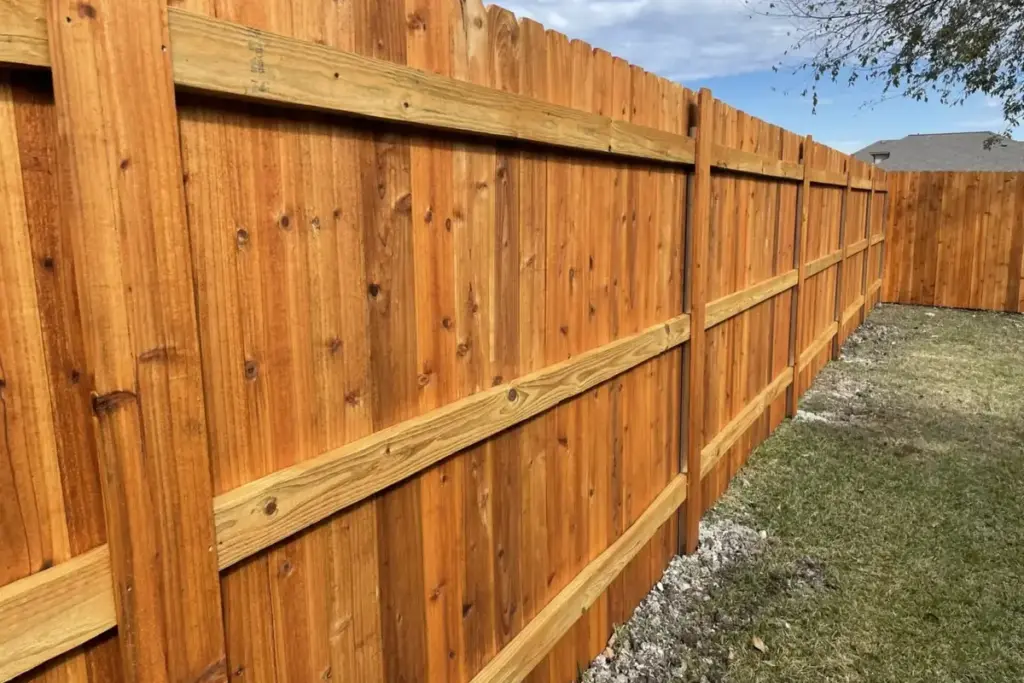
Height limits come from your city’s code and your HOA’s guidelines. Two examples:
- Georgetown (single-family homes): front-yard fences up to 4 feet and at least 50% open, like iron or picket. Side and rear fences up to 6 feet, lower along some streets and alleys, with 8 feet allowed in certain cases. Height is measured from the ground on the higher side of the fence (City of Georgetown).
- Austin: a solid fence on a property line can be up to 6 feet from natural grade, or up to 7 feet where the grade changes by at least 1 foot. Up to 8 feet is allowed in some situations with written consent from the neighbor (City of Austin). Our Austin wood privacy fence page covers these rules in more detail.
Austin’s safe fencing rules apply to fences built since July 31, 2023, and to an existing fence when more than half of it is replaced. They rule out spiked pickets or spiked decorative tops, pickets above the top rail that are spaced more than 2 inches and less than 9 inches apart, razor wire, and most barbed wire. Flat-top fences and chain link with knuckled tops meet the rule (City of Austin).
Which Building Code Does Your City Use?
Fences mostly follow your city’s zoning rules. Decks, pergolas, patio covers and railings also have to meet a building code. Most cities here use the International Residential Code (IRC) for homes and the structures around them, and the International Building Code (IBC) for commercial work. The catch: every city adopts its own edition, so the code year changes from one town to the next.
Why the edition matters: the IRC is where the deck rules live (Chapter 5, including the section on exterior decks) and where guard and handrail rules live (Chapter 3). Cities adopt a specific edition, often with their own local amendments, so footing, ledger, guard and stair details can differ from city to city. Some cities also adopt a separate pool and spa code. Georgetown, for example, requires every pool to be engineered as of August 1, 2024 (City of Georgetown).
| City | Residential code | Building code | Notes | Official source |
|---|---|---|---|---|
| Austin | 2024 IRC | 2024 IBC | Effective July 10, 2025, with local amendments | City of Austin |
| Round Rock | 2024 IRC | 2024 IBC | City of Round Rock | |
| Hutto | 2024 IRC | 2024 IBC | City of Hutto | |
| Belton | 2024 IRC | 2024 IBC | Effective October 1, 2026 | City of Belton |
| Georgetown | 2021 IRC | 2021 IBC | Effective November 1, 2023, with local amendments | City of Georgetown |
| Sun City (Georgetown) | 2021 IRC | 2021 IBC | Sun City is inside Georgetown city limits, so Georgetown’s codes apply | Sun City Texas Community Association |
| Cedar Park | 2021 IRC | 2021 IBC | Effective June 1, 2022; also applies in the city’s ETJ | Cedar Park Code § 3.01.001 |
| Leander | 2021 IRC | 2021 IBC | City of Leander | |
| Pflugerville | 2021 IRC | 2021 IBC | With local amendments | Pflugerville Code § 150.02 |
| Liberty Hill | 2021 IRC | 2021 IBC | City of Liberty Hill | |
| Lago Vista | 2021 IRC | 2021 IBC | Adopted January 4, 2024 | Lago Vista Ord. 24-01-04-05 |
| West Lake Hills | 2021 IRC | 2021 IBC | West Lake Hills Code § 22.03.092 | |
| Jarrell | 2018 IRC | 2018 IBC | City of Jarrell | |
| Temple | 2015 IRC | 2015 IBC | The city lists the 2015 International Codes | City of Temple |
| Manor | 2021 IRC for permits submitted on or after January 1, 2027 | 2021 IBC from the same date | Until then, check with the city | City of Manor |
| Taylor | Check with the city. Its building page lists the 2018 codes, and the city has also published 2024 code amendments. | City of Taylor | ||
| Burnet | Check with the city. We couldn’t confirm the current edition from an official page. | City of Burnet | ||
Outside city limits: Williamson County says it hasn’t adopted the state’s residential building code standards for unincorporated areas, so it doesn’t require new homes to follow a building code (Williamson County). Travis County requires new homes, and additions that grow a home by more than 50 percent, to meet the 2008 IRC or the edition Austin uses, with third-party inspections (Travis County Code ch. 480). Some cities also apply their code in their extraterritorial jurisdiction (ETJ), so check your address first.
Last checked: November 2026. Cities update their codes, so confirm with your city before you build.
You don’t have to keep track of this. We do. We stay current on the code each city has adopted, design your deck, pergola or railing to it, and handle the permit and inspections when your project needs them.
HOA Fence Rules and Approval
If you live in an HOA, plan on two approvals: the HOA’s and, where your city requires it, the city’s. They check different things. Your HOA reviews the design against its guidelines, like height, style, material, color and placement. The city reviews it against city code. Getting one doesn’t replace the other.
If you’re adding a deck or pergola too, it usually makes sense to put the whole project on one HOA application, because HOAs typically want to see the whole scope. City permits work differently: a fence usually needs its own fence permit, separate from a deck or pergola permit.
Get written HOA approval before any work starts, and build to the approved plan. For what Texas law lets an HOA require, and how to appeal a denial, read our guide to HOA fence rules in Texas. If you’d rather not deal with the packet, see how our HOA fence approval help works.
Before You Dig: Property Lines and Utilities
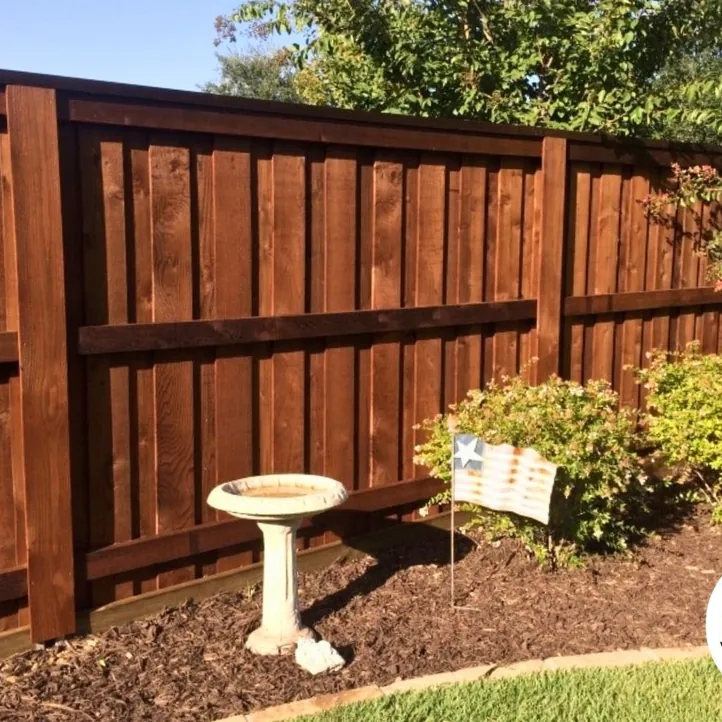
- Know where your line is. Your survey shows your property lines and easements. Most homeowners got one at closing. We mark up your survey to show where the fence will go. We don’t do surveys, so if you don’t have one, you’ll need a surveyor. Our guide to finding your property lines explains the basics.
- Check easements. Georgetown doesn’t allow fences in drainage easements or floodways, and masonry walls near utility easements need extra review (City of Georgetown).
- Get utilities marked. Post holes dug with an auger to 16 inches or deeper fall under the state’s call-before-you-dig law. Our posts aim for 24 inches deep, and at least 12 inches into solid rock when we hit it.
How We Handle Permits and HOA Approval
- Tell us about your yard. Call 512-337-3714 or request a free estimate, and send your HOA guidelines and survey if you have them.
- Get a written plan. We design the fence to your city’s code and your HOA’s guidelines, and your quote lists the materials, the gates, the tear-out and haul-off of any old fence, and any rock work, up front.
- Let us handle the paperwork. We mark up your survey, prepare your HOA packet, and handle the city permit wherever your city requires one. Then we build. Most fences take a day.
Want typical prices first? See our fence cost guide, or read how fence installation works with us.
Texas Fence Laws: FAQ
Do I need a permit to build a fence in Texas?
Texas doesn’t issue a statewide fence permit. Your city decides. Georgetown requires a fence permit for most new fences inside city limits. Austin requires one only for fences in a floodplain, over 7 feet at any point, or over 6 feet along a public street. Round Rock and Cedar Park don’t require a permit for a typical residential fence. Leander has its own fence rules, so confirm height and permit requirements with the City of Leander before you build. Your HOA may still need to approve the fence.
How tall can a fence be in Texas?
There’s no single state height limit. Cities set height limits. In Georgetown, front-yard fences can be up to 4 feet and at least 50% open, and side and rear fences are generally limited to 6 feet. In Austin, a solid fence on a property line can be up to 6 feet from natural grade, or up to 7 feet where the grade changes by at least 1 foot. HOAs often set their own limits too.
Is HOA approval the same as a city fence permit?
No. They’re separate. Your HOA reviews the design against its guidelines, and the city reviews it against city code. Getting one doesn’t replace the other. If you’re also adding a deck or pergola, HOAs usually want to see the whole scope on one application, while a city that requires a fence permit usually wants a separate fence permit.
Can my HOA stop me from building a fence in Texas?
An HOA can’t enforce a rule that prevents you from installing a perimeter fence as a security measure, but it can regulate the type of fence you install (Texas Property Code §202.023). It can also review your design, so get written approval before you build.
Do I need to call 811 before digging fence post holes in Texas?
Yes, if you’re doing the digging yourself. Texas811 tells homeowners to contact 811 before building or repairing a fence. State law requires anyone digging 16 inches or deeper with an auger or other powered equipment to notify a notification center at least 48 hours before digging, not counting weekends and legal holidays, with a few exceptions such as agricultural work on private property. Fence post holes usually go deeper than 16 inches. Ours aim for 24 inches. If Sagamore is building your fence, or a deck that requires digging, you don’t call 811: our office requests the dig locate once you sign, because we’re responsible for the excavation. Your part is telling us where your private lines run, like sprinkler, pool, propane and septic lines and invisible pet fence wire, since 811 doesn’t mark private lines.
Which building code does my city use for a deck or pergola?
It depends on the city. As of November 2026, Austin, Round Rock, Hutto and Belton use the 2024 International Residential Code (IRC). Georgetown (including Sun City), Cedar Park, Leander, Pflugerville, Liberty Hill, Lago Vista and West Lake Hills use the 2021 IRC. Jarrell uses the 2018 IRC and Temple the 2015 codes. We keep up with each city’s adopted code and handle the permit and inspections when your project needs them.
We’re fence builders, not attorneys. This is general information, not legal advice. For your situation, talk to a Texas real estate attorney. This guide reflects the official pages linked above as of November 2026. Cities and HOAs update their rules, so confirm with your city and your HOA before you build.
Questions about the rules for your address? Call Sagamore Fence & Deck at 512-337-3714 or request your free estimate. Built Right.