Fences in Texas go through a lot. Weeks of intense heat and relentless sun can be followed by heavy rain, strong winds, and sudden storms. All of this slowly affects how a fence looks and holds up.
The material you choose at the beginning can save a lot of trouble later. Some options simply hold up better and need less fixing along the way.
Sagamore Fence and Deck is widely chosen for professional residential fencing services designed for Texas properties.
What Makes Central Texas Weather Tough on Fences?
Many fencing materials can look wonderful during installation. The real test begins after years of exposure to the Texas climate.
- Intense Sun and UV Exposure: A fence sits out in the sun for hours every day. That constant exposure can leave it faded, weathered, and worn.
- Heavy Rain and Moisture Damage: Rainwater can seep into small cracks, leading to swelling, warping, mold growth, and rot in some materials.
- Strong Winds and Storm Conditions: Strong winds can be hard on fences during storms. A few rough weather days are enough to expose weak spots and loosen parts.
- Temperature Fluctuations Throughout the Year: Materials respond to temperature changes by slightly expanding or contracting. That constant movement can gradually put stress on a fence.
It is better to rely on a trusted expert when searching for a fence company near me to help you choose the best fence material.
What Is the Best Fence Material for Texas Homes?
Ask five homeowners what fence material they prefer, and you’ll probably get five different answers. Privacy, maintenance, appearance, durability, and budget all play a role.
Comparing Fence Material Options
| Material | Privacy | Maintenance | Weather Resistance | Lifespan |
| Cedar Wood | Excellent | Moderate | Good | 15-25 Years |
| Vinyl | Excellent | Low | Very Good | 20-30 Years |
| Ornamental Iron | Low | Moderate | Excellent | 25+ Years |
| Composite | Excellent | Very Low | Excellent | 25-30+ Years |
| Aluminum | Low | Low | Excellent | 25+ Years |
Cedar Wood
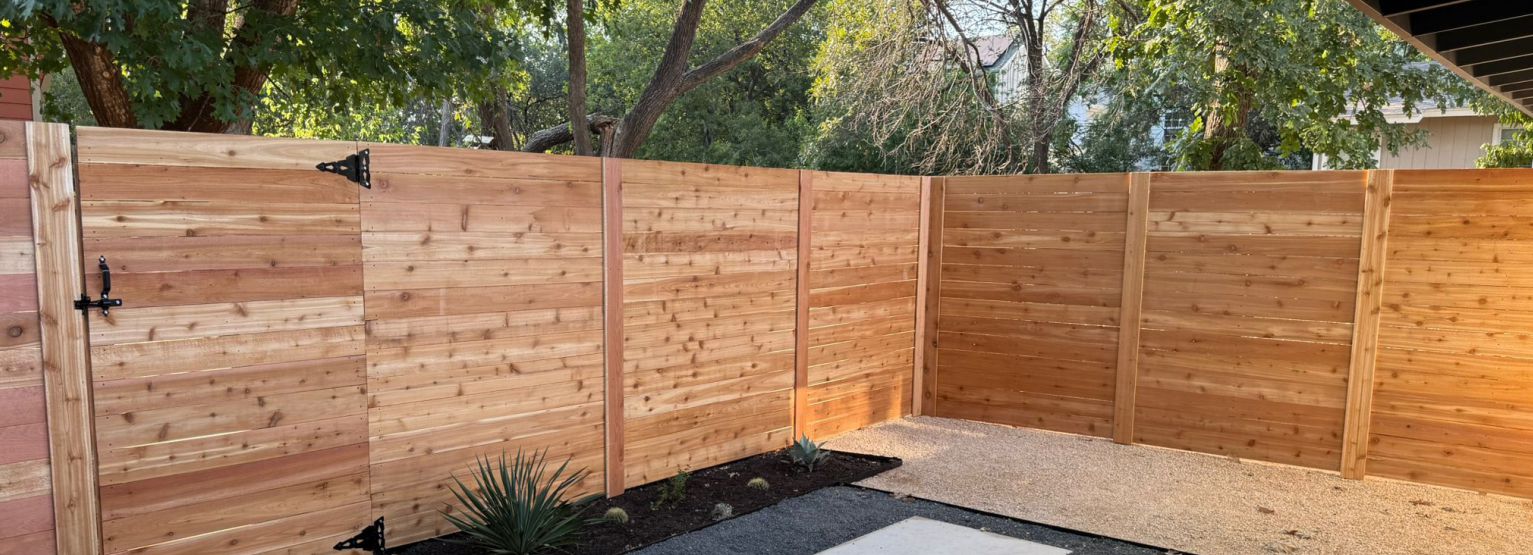
Cedar remains one of the most popular fencing materials throughout Texas because it naturally handles heat, insects, and moisture better than many other wood species.
A Few Things to Know
- The wood’s natural oils help protect it from insects and decay.
- Repairs are usually simple if a board gets damaged.
- Cedar doesn't get as hot as many synthetic materials in direct sun.
- Dry weather can create small gaps between boards over time.
- Cedar’s biggest challenge is usually UV exposure, not rot (sunlight can fade and weather the surface).
If you’re looking for a private backyard, cedar is one of the best privacy fence materials that creates a nice balance of beauty, privacy, and practicality.
Vinyl
Vinyl fencing appeals to homeowners who want a clean appearance without regular staining, sealing, or painting.
A Few Things to Know
- Vinyl quality varies significantly between manufacturers.
- UV inhibitors (additives that slow down sun damage in plastic) matter more than panel thickness in Texas climates.
- Lower-quality vinyl can become brittle after years of extreme sun exposure.
- Vinyl never needs staining or sealing.
- Dirt and pollen usually come off easily with water and mild soap.
The higher upfront cost often pays off through reduced maintenance over the life of the fence.
Ornamental Iron
Ornamental iron is often chosen for its timeless appearance and excellent security benefits.
A Few Things to Know
- Modern powder-coated finishes provide much better protection than older paint systems.
- Maintenance usually means inspecting small areas where coatings might be damaged.
- Iron fences allow wind to pass through, reducing storm-related pressure.
- Property visibility can help improve security around entry points.
- Proper installation is critical because the material itself often outlasts the posts supporting it.
Many homeowners choose ornamental iron when curb appeal is just as important as functionality.
Composite
Composite fencing combines wood fibers and synthetic materials to create a fence designed for long-term durability.
A Few Things to Know
- Composite is known for staying low-maintenance over long periods, like 20 years.
- Color consistency remains more stable than many wood products.
- Composite resists insects, moisture, and warping exceptionally well.
- Higher upfront costs are often offset by lower maintenance expenses
- Premium products now look much more natural than early composite fencing designs.
For homeowners planning to stay in their property for many years, composite can be a very attractive investment.
Aluminum
Aluminum fencing offers durability, clean lines, and excellent resistance to weather-related deterioration.
A Few Things to Know
- Aluminum naturally resists rust, and that makes it ideal for long-term outdoor use.
- Lightweight construction reduces stress on posts and hardware.
- Powder-coated finishes stay looking good for years.
- Aluminum performs particularly well during wet weather.
- Repairs are often simpler than repairing damaged wrought iron sections.
Although it does not provide privacy, aluminum remains a strong option for decorative and perimeter fencing.
How to Choose the Right Fence Material for Your Property
You need to consider a few things to make sure the investment you make pays off well.
- Consider Your Budget: The initial installation is just one piece of the full cost. You also need to factor in maintenance, repairs, staining, and future replacement.
- Evaluate Maintenance Requirements: Some homeowners are okay with maintaining a wood fence, while others prefer a solution that requires little attention beyond occasional cleaning.
- Determine Privacy and Security Goals: A few families explore options with privacy as a priority, while others just want boundaries or security around their property.
- Think About Long-Term Weather Resistance: The strongest fence is not always the one with the highest price tag. You can take the guidance of a local Georgetown fence company to find materials that perform consistently through heat, drought, storms, and soil movement.
- HOA and Neighbourhood Considerations: Many communities have specific fencing requirements regarding materials, styles, colors, and heights. The experts you choose should take that into consideration; otherwise, you may end up facing costly changes later.
Why Homeowners Trust Local Fence Services in Georgetown
Locals are usually better to work with than contractors from outside the area because they’re easier to reach and deal with. Here are a few more reasons to prefer local fencing teams:
- Understanding Central Texas Climate Challenges: Local Fence services in Georgetown understand what Texas weather can do to a fence over the years, so they match both the material and installation to local conditions.
- Customized Solutions for Residential Properties: Local experts help you choose a fence that fits your property and your needs.
- Long-Term Value and Workmanship: Experienced local teams for fence installation in Austin provide fencing work that lasts longer and performs better.
Protect Your Property with Expert Fence Solutions from Sagamore Fence and Deck
A fence is something you see every day, so it is worth getting right. As there is no one-size-fits-all answer when it comes to the best fence material for Texas homes, you need experts to guide you.
Our team helps homeowners compare their options, understand the trade-offs, and choose a fence they won’t second-guess later.